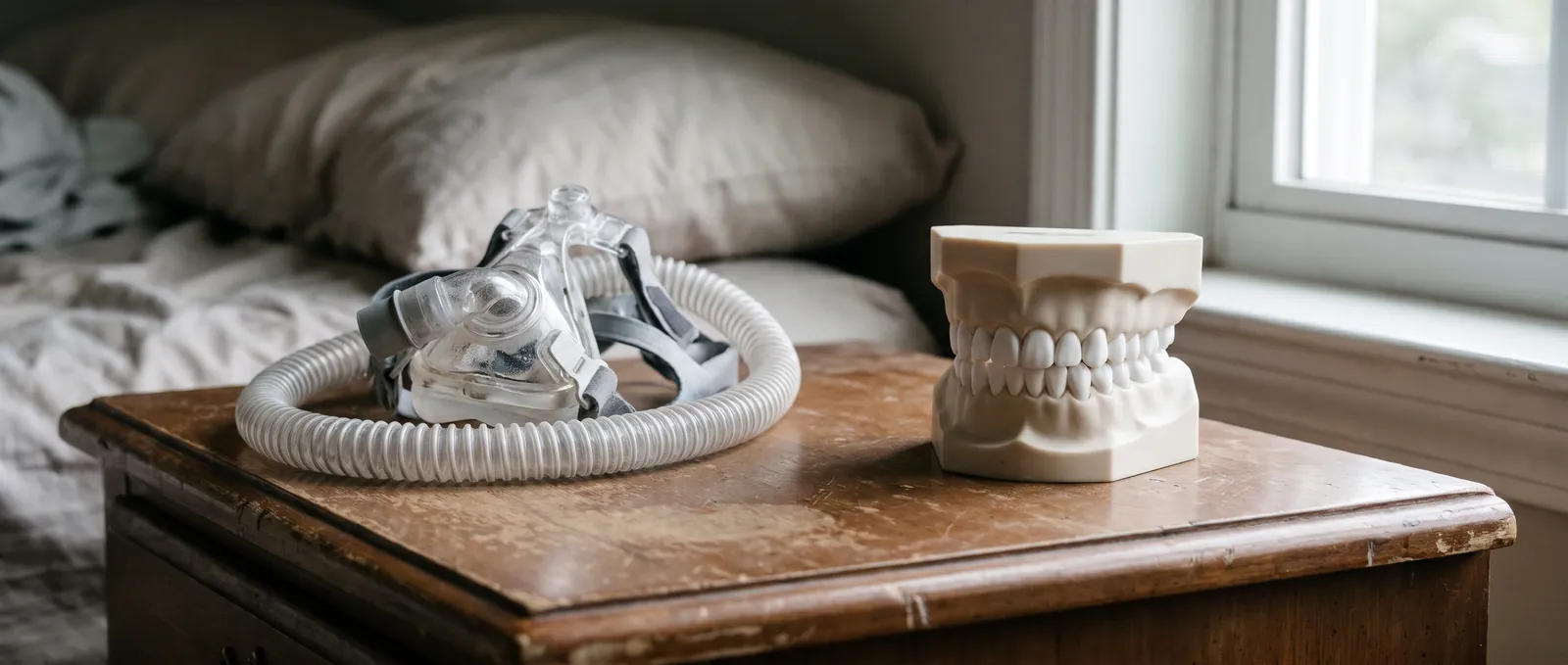
Is there any surgery to fix sleep apnea?
Yes. Surgery for obstructive sleep apnea includes operations on the throat, tonsils and tongue, an implanted nerve stimulator, and jaw surgery. Maxillomandibular advancement (MMA) is the jaw option: the upper and lower jaws are moved forward, which pulls the tongue and soft palate forward with them and enlarges the airway. A 2021 American Academy of Sleep Medicine (AASM) guideline places surgery in the discussion for adults who cannot use or accept CPAP.
Obstructive sleep apnea is a condition in which your upper airway closes off again and again during sleep, as the National Heart, Lung, and Blood Institute (NHLBI) describes it. MedlinePlus lists large tonsils and adenoids, a large tongue that falls back, a short lower jaw and obesity among the causes. Jaw surgery works on the bony frame around that soft tissue.
The 2021 AASM guideline on surgical referral recommends discussing a sleep surgeon referral with adults who have a body mass index (BMI) under 40 and cannot use or will not accept positive airway pressure (PAP, the device family that includes CPAP). It also suggests trying PAP first even when a major airway abnormality is found, so surgery follows a real CPAP trial.
How successful is MMA surgery for sleep apnea?
MMA surgery lowers sleep apnea events sharply for most patients, but success in the research has a narrow meaning. A 2025 systematic review in Otolaryngology Head and Neck Surgery pooled 31 studies and 1,597 patients and found the apnea-hypopnea index (AHI) fell by about 42 events per hour on average. In the 2016 meta-analysis, most patients met the surgical success definition, but fewer than half reached an AHI under 5.
The apnea-hypopnea index (AHI) is the number of times per hour of sleep that breathing stops or turns shallow. The 85.5% figure you often see quoted is the surgical success rate. Someone who goes from an AHI of 60 to 18 counts as a success, yet 18 is well above 5, the AHI at which the AASM recommends treating people who have symptoms.
In the same 2016 analysis, a starting AHI under 60 was the factor most strongly linked to reaching an AHI under 5. A 2026 meta-analysis of 36 studies in The Laryngoscope found those odds also fell slightly with each year of age. Limits: the 2016 studies averaged about 12 patients each, 73.5% of those patients with that information had already had another sleep apnea surgery, and the 2026 review drew mainly on case series and cohort studies.
| Outcome | What it means | MMA result in the research |
|---|---|---|
| Any improvement | AHI lower after surgery than before | 512 of 518 patients (98.8%), 2016 meta-analysis |
| Surgical success | AHI cut by more than half and below 20 events per hour | 85.5% of 455 patients with AHI data, 2016 meta-analysis |
| AHI under 5 | Below the level at which treatment is recommended for people with symptoms | 38.5% of the same 455 patients |
| Daytime sleepiness | Epworth Sleepiness Scale, where a lower score is better | Average 13.5 before, 3.2 after, 2016 meta-analysis |
| Eight years or more later | Average AHI at very long-term follow-up | 53.2 before surgery, 23.1 later, in 35 patients, 2019 meta-analysis |
Is jaw surgery worth it for sleep apnea?
Jaw surgery for sleep apnea is most likely to be worth it when four things line up: a sleep study confirms obstructive sleep apnea, CPAP has truly failed or is not acceptable to you, your jaws sit far enough back to narrow the airway, and your health allows a major operation. When one of these is missing, a less invasive treatment usually comes first.
Worth it depends on what you compare against. For someone who cannot sleep with a mask, an average AHI drop of 80.1% (the 2016 figure) can be a large gain even if some events remain. For someone sleeping well on CPAP, a major operation adds risk for little extra benefit. Take this checklist to your physician and to a surgical consultation:
- Sleep study: obstructive sleep apnea confirmed. Snoring by itself is not a reason for jaw surgery.
- CPAP history: tried with support and adjustments, and still not workable or not acceptable to you.
- Jaw position: a lower jaw or chin that sits far back, or a bite that would call for jaw surgery on its own.
- Other airway factors: large tonsils or a large tongue may need their own treatment.
- Weight: the AASM guideline ties sleep surgeon referral to a BMI under 40.
- Starting AHI and age: under 60 and younger go with better odds of an AHI under 5.
Does jaw surgery not help with sleep apnea?
Jaw surgery helps nearly everyone who has it, but it leaves many people with some sleep apnea. In the 2016 meta-analysis, 98.8% of patients improved, yet about 6 in 10 still had an AHI of 5 or more afterward. Results also depend on whether the jaw position is really the cause, and some groups should not start with MMA at all.
Results can drift. A 2019 meta-analysis of long-term MMA outcomes (6 studies, 120 patients) found the average AHI stayed low at 4 to 8 years, 65.8 before and 7.7 after, but in 35 patients followed 8 years or more it averaged 23.1, which the authors call moderate sleep apnea. They add that firm conclusions cannot be drawn. MMA is usually not for:
- People who have not had a sleep study yet.
- People doing well on CPAP or an oral appliance.
- People with central sleep apnea, in which the brain does not send the signals needed to breathe. The MMA studies above were done in obstructive sleep apnea, where the airway itself becomes blocked.
- Adults with a BMI of 40 or more, for whom the AASM guideline recommends discussing bariatric surgery.
- People whose health makes a long operation under general anesthesia unsafe.
- Anyone unwilling to accept lasting lower face numbness or a change in facial balance.
What are some alternatives to using a CPAP machine for sleep apnea?
The main alternatives to a CPAP machine are a custom oral appliance from a dentist, hypoglossal nerve stimulation (an implanted device that stimulates the nerve under the tongue), other airway surgery, weight loss with side sleeping, and jaw surgery. Each suits a different person. None should replace CPAP without your physician's input. The table compares the four options people ask about most.
Compare rows with care, because each study picked different patients. Nerve stimulation is studied in selected patients, while most 2016 MMA patients had already had other surgery. Sleeping on your side and losing excess weight help some people, mainly with milder sleep apnea, according to the NHLBI treatment page and MedlinePlus.
| Option | Who it usually suits | What the evidence shows | Main trade-offs |
|---|---|---|---|
| CPAP | Most adults with obstructive sleep apnea, as the first treatment | Works well to treat it in most people (MedlinePlus) | Mask and pressure every night; long-term adherence remains low (2024 review) |
| Custom oral appliance | Adults who cannot tolerate CPAP or prefer another option (AASM and AADSM, 2015) | A custom, adjustable device from a qualified dentist, checked with a follow-up sleep test | Possible tooth and bite changes; needs dental follow-up |
| Hypoglossal nerve stimulation | Selected adults with moderate to severe sleep apnea who cannot use CPAP (2024 review) | At 12 months, about 47% reached an AHI under 5 (44 studies, 8,670 patients) | An implanted device; the effect eased gradually over the first year |
| Jaw surgery (MMA) | Adults whose jaw position narrows the airway and who cannot use CPAP | 85.5% surgical success, 38.5% AHI under 5 (2016) | Major surgery, weeks of recovery, common lower face numbness |
How long does it take to recover from sleep apnea jaw surgery?
Recovery from sleep apnea jaw surgery usually spans several weeks. Swelling peaks in the first few days, desk work or classes are often possible again within about two weeks, and the bone is still firming up after month two. Numbness is the most common effect: a 2025 meta-analysis found lower face numbness in 83.4% of patients early on and 32.7% beyond one year.
Sleep apnea advancement moves the jaws a long way: on average 8.4 mm for the upper jaw and 11.2 mm for the lower jaw in the 2026 Laryngoscope review. The 2025 review found about 22% later had plates or screws removed and reported no major complications across 31 studies. The Greater Atlanta OFS jaw surgery page describes this general timeline:
- Surgery day: general anesthesia, usually in a hospital; small plates and screws fix the bones in place, so most people are not wired shut.
- First few days: swelling rises to its peak; you eat liquids or very soft food and sleep propped up.
- Weeks 1 to 2: swelling goes down, and desk work or classes are often possible again.
- Weeks 2 to 6: you add soft solid foods once your surgeon clears them; numbness tends to fade gradually.
- Month 2 on: the bone continues to firm up and the last of the swelling resolves.
What does a sleep apnea evaluation look like at Greater Atlanta Oral & Facial Surgery?
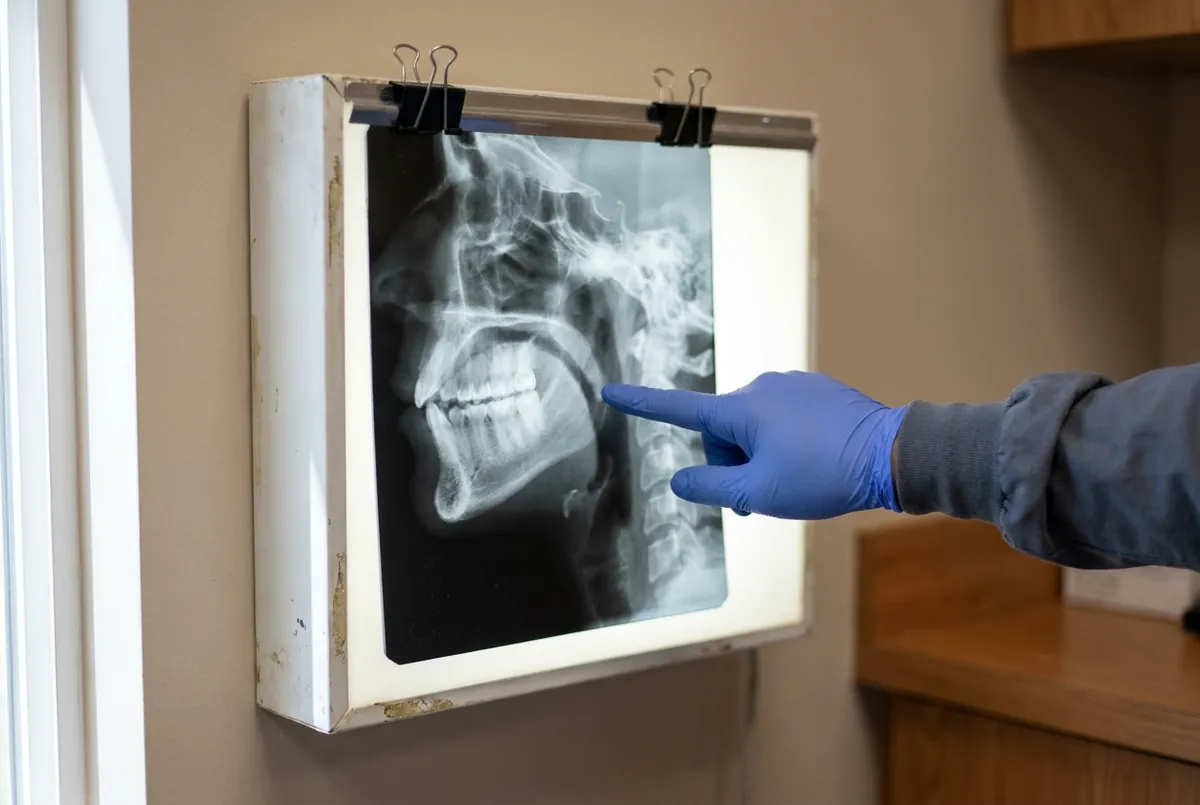
At Greater Atlanta Oral & Facial Surgery, a sleep apnea visit is a surgical evaluation, not a diagnosis. Dr. Abtin Shahriari goes through your sleep study report, looks at your face, jaws, bite and mouth, and may order a cone beam CT scan, a 3D X-ray of the airway behind your tongue and palate. The point is to learn whether your jaw structure plays a part.
Because sleep apnea is treated as a medical problem, your medical plan is often involved, and some plans require a referral from your physician before the visit. The practice works with most dental and medical insurance plans for surgical care; see the insurance and financing section of the patients page. Nothing surgical happens at this visit, so no sedation is needed.
- No sleep study yet? Ask your physician about testing first. The sleep apnea surgical evaluation builds on that report.
- Bring the report and write down what you have already tried and why it did not work. Dr. Abtin spends most of the consultation listening.
- When your case needs it, the 3D scan maps your jaws and airway.
- If your jaws appear to narrow the airway, surgery that moves them forward may be one option, planned on a 3D model first.
- If they do not, treatments your physician manages may fit better, and you take the findings back to your physician or sleep specialist.
- Either way, keep using CPAP unless your physician changes it.
Questions to ask your surgeon
- Does my scan show that my jaw position narrows my airway, and where?
- Given my sleep study, what are my odds of surgical success versus an AHI under 5?
- Do I need tonsil or other airway treatment too?
- How likely is lasting numbness in my lip or chin?
- How will my face change when the jaws move forward?
- Who orders the follow-up sleep study?
When should you call a doctor right away?
Call 911 for trouble breathing, choking that does not stop, chest pain or signs of a stroke, whether or not you have had surgery. Untreated sleep apnea raises the risk of stroke, heart attack and other serious problems, according to the NHLBI, and daytime sleepiness from it raises the risk of motor vehicle accidents, according to MedlinePlus.
The offices in Atlanta (Buckhead) and Cumming are open Monday to Friday, 7:00 AM to 5:00 PM, and if you have pain or an emergency, every attempt will be made to see you that day. If you have a sleep study and CPAP has not worked for you, you can request a surgical evaluation and bring your report to the first visit.
- After jaw surgery: call 911 or go to the ER if breathing or swallowing becomes hard, swelling moves toward the eye or neck, or you run a high fever.
- Call the office if bleeding keeps going or pain is climbing rather than easing.
- Call your physician soon if you nod off while driving or someone notices new pauses in your breathing.
This guide is general information about oral surgery, not a diagnosis or a treatment plan. Your own options depend on an exam, your imaging and your health history, and they are set at your consultation. Contact the office with questions about your own care.