
How do you qualify for jaw surgery?
To qualify for jaw surgery under a medical plan, you usually need two things on paper: a measurable skeletal jaw deformity and a functional problem it causes. Cigna's policy 0209 (effective October 2026) and UnitedHealthcare's policy MP.013.25 (effective May 2026) list the same core measurements, such as a front-teeth overjet of 5 mm or more, or zero to negative, which takes in an underbite.
The second half of the test is function. Cigna accepts persistent chewing and swallowing trouble once other causes are ruled out, weight loss or malnutrition from the deformity, speech problems a speech and language pathologist ties to the jaw, or jaw muscle pain lasting at least six months despite physical therapy and splints. UnitedHealthcare lists chewing and swallowing dysfunction and documented speech impairment. Aetna's bulletin 0095, last reviewed in March 2026, asks for deformities that cause significant chewing or airway dysfunction and are too severe for orthodontics alone.
A cosmetic-only case does not qualify. UnitedHealthcare says the surgery is not medically necessary when done for cosmetic purposes only, and Aetna treats changing facial features for looks as cosmetic. Cigna also counts extras added only to improve appearance, such as chin reshaping (genioplasty) or contour work, as cosmetic. The focus on function matches what surgery measurably changes: a 2023 meta-analysis of 17 studies in the Journal of Oral Rehabilitation found bite force and tooth contact improved significantly 1 and 2 years after surgery, though chewing did not reach the level of people with normal bites. AAOMS likewise lists functional reasons, such as difficulty chewing, biting or swallowing, chronic jaw joint pain and obstructive sleep apnea, among the signs that corrective jaw surgery may be needed.
| What the policy measures | In plain words | Listed by |
|---|---|---|
| Overjet of 5 mm or more, or zero to negative | Upper front teeth far ahead of the lower ones, or front teeth meeting edge to edge or in an underbite | Cigna, UnitedHealthcare, Aetna |
| Molar mismatch of 4 mm or more | Back teeth meet out of line, front to back | Cigna, UnitedHealthcare, Aetna |
| Open bite: no front overlap, or a back gap over 2 mm | Some teeth do not touch when you bite | Cigna, UnitedHealthcare |
| Width mismatch of 4 mm across both sides, or 3 mm on one side | Upper jaw too narrow or too wide for the lower jaw | Cigna, UnitedHealthcare, Aetna |
| Asymmetry over 3 mm with a matching bite shift | Jaw noticeably off to one side | Cigna, UnitedHealthcare, Aetna |
How hard is it to get jaw surgery covered by insurance?
Getting jaw surgery covered is often a documentation test as much as a medical one. A 2021 study in the Journal of Oral and Maxillofacial Surgery applied five insurers' guidelines to carefully selected surgical patients: four rejected 6 to 12 percent, while UnitedHealthcare's guideline at the time rejected 86 percent, mostly because of a rule about what caused the jaw problem.
The study traced denials to three causes: no significant jaw deformity on the guideline's terms, no demonstrable health impairment, or a cause of the condition that the plan did not cover. Only UnitedHealthcare used that last rule then, accepting causes such as a birth condition, an injury, a tumor or a cyst. Its 2026 policy builds its criteria on the same measurements and functional problems as Cigna's, so the 2021 rates may not match today's rules. Plan design adds another barrier. Cigna's policy opens by saying coverage for orthognathic surgery varies across plans and that a plan document may contain a specific exclusion, and UnitedHealthcare notes that sending records does not by itself secure coverage.
A denial can be appealed. CMS explains that your plan must tell you why it denied a request, that you can file an internal appeal asking it to reconsider, and that you can then take the appeal to an independent third party for review. Read the stated reason first, since a missing record is a different problem from a plan exclusion. Ask your plan how to appeal; your state's Consumer Assistance Program may also be able to help.
How can you get insurance to cover jaw surgery?
Coverage for jaw surgery usually depends on a complete pre-authorization file sent before treatment starts. Pre-authorization, also called precertification or prior approval, is the plan's review of a planned treatment before you have it. Aetna's bulletin says that, for plans requiring it, jaw surgery must be precertified before pre-surgical orthodontic treatment begins, and that skipping it may lead to a denial of benefits.
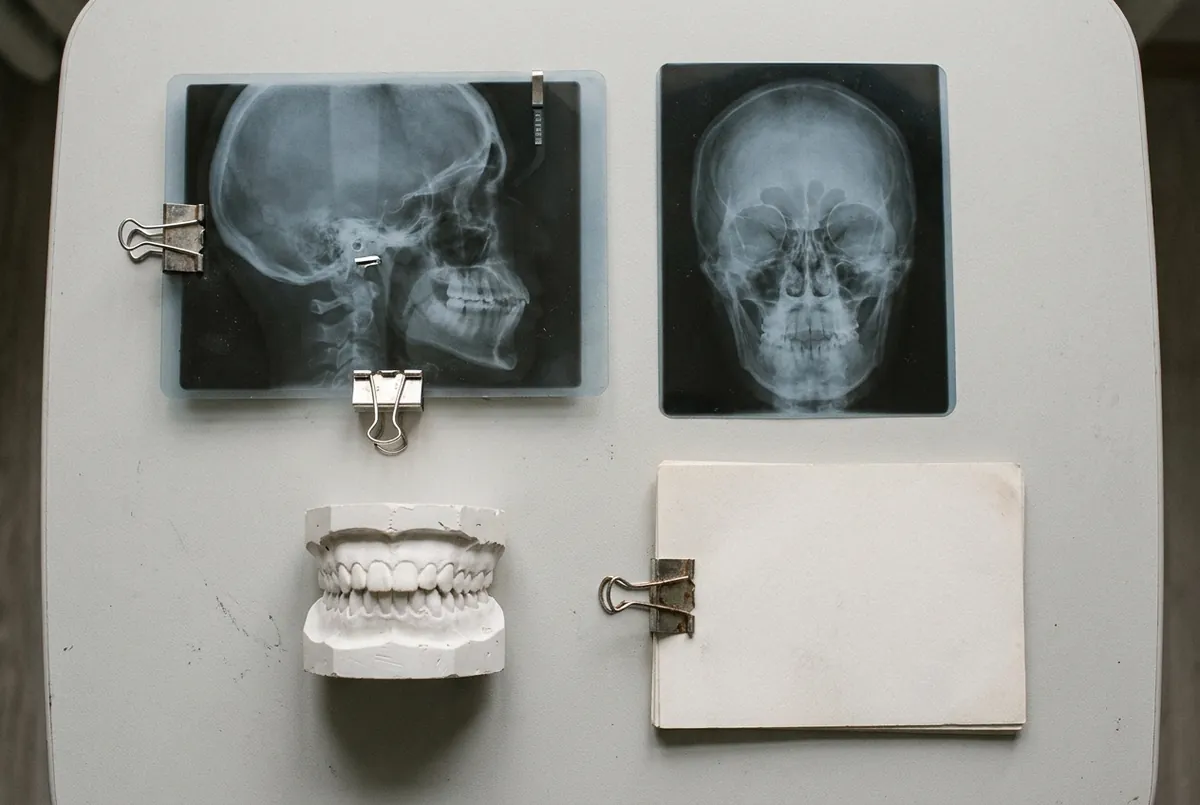
Approval rarely rests on one item. The measurements on your X-rays are checked against the policy numbers, and Cigna also wants records from your treating physician showing how the functional problem was evaluated and managed. Notes that already show earlier care, such as jaw muscle pain lasting six months despite physical therapy and splints under Cigna's rule, answer the reviewer's question before it is asked.
- Read your medical plan document, or ask the plan, whether orthognathic surgery is excluded and whether pre-authorization is required.
- Have the consultation and records: X-rays or a 3D scan, photos and bite records.
- Collect notes from any physician, speech pathologist or therapist who has treated the functional problem.
- Make sure the request reaches the plan before orthodontic treatment starts, if your plan requires that.
- Keep the written decision, and ask how long an approval stays valid.
- If the request is denied, read the reason and ask the plan how to appeal.
| Item | Who usually provides it | Why the plan wants it |
|---|---|---|
| Medical history and exam noting your symptoms | Your surgeon | Ties the deformity to a real problem (Cigna) |
| Description of the specific deformity | Your surgeon | States what is wrong with the bones (Cigna) |
| Side and front cephalometric X-rays with analysis | Your surgeon or orthodontist | Proves the policy measurements (Cigna; Aetna asks for pre-orthodontic imaging) |
| Clear photographs of your bite | Your surgeon or orthodontist | Shows the bite the X-rays describe (Cigna) |
| Study models or molds of your teeth | Your orthodontist | Aetna asks for them; Cigna may request them |
| Records of the functional problem and past treatment | Your physician, speech pathologist or therapist | Shows the impairment was evaluated and treated (Cigna, Aetna) |
| Approval before braces start, if your plan requires it | Your treating providers, through your plan's process | Aetna may deny benefits without it |
What type of insurance will pay for jaw surgery?
Medical insurance, not dental insurance, is usually the plan that pays for corrective jaw surgery, because the surgery treats a skeletal problem with functional effects. The braces around it are different: Aetna's bulletin says orthodontic care, both pre-surgical and post-surgical, is dental in nature and not covered under its medical plans, so that part may fall to a dental plan with orthodontic benefits, or to you.
One treatment can therefore create two sets of bills. Braces often stay on for a year or longer before surgery and for some months after, so it is worth checking early whether your dental plan includes adult orthodontics. Here is how the costs usually split:
- Medical plan: the surgeon's fee, the hospital or surgery facility and anesthesia for a covered operation; under Cigna's policy, bone grafts and surgical splints used with a medically necessary jaw surgery may also be considered medically necessary.
- Dental plan: the orthodontic treatment on either side of surgery, if your plan includes orthodontics.
- You: deductibles, coinsurance, anything your plan excludes and any out-of-network gap.
Does insurance cover jaw surgery for sleep apnea?
Insurance often reviews jaw surgery for obstructive sleep apnea under a separate sleep apnea policy rather than the standard jaw surgery rules. Cigna's policy 0209 sends maxillomandibular advancement for sleep apnea to its own sleep apnea policy, UnitedHealthcare's jaw surgery policy says it does not address sleep apnea surgery, and Aetna lists jaw deformities contributing to obstructive sleep apnea as an indication.
Maxillomandibular advancement (MMA) is a jaw operation that brings both jaws forward to widen the airway behind the tongue and palate. A sleep study confirms the diagnosis, and a plan may want your physician's referral before it reviews a surgical evaluation. If you are weighing surgery for sleep apnea, ask your plan which policy applies to you and what it requires, and read how a sleep apnea surgical evaluation works before your visit.
Is orthognathic surgery covered by Medicare?
Medicare's position on orthognathic surgery is less clear-cut than its dental exclusion. The CMS dental coverage page, updated in March 2026, says Medicare does not cover the care, removal or replacement of teeth, but it lists some covered jaw services, such as stabilizing teeth while a jaw fracture is reduced. The page does not name corrective jaw surgery, so ask Medicare or your plan directly.
CMS adds that dental services can be covered when they are inextricably linked to the clinical success of another covered medical service, with documented coordination between the medical and dental providers. Some Medicare Advantage plans also add dental benefits, so a Medicare Advantage member should ask the plan for its written policy on jaw surgery before planning treatment.
How much is jaw surgery out of pocket?
What you pay out of pocket for jaw surgery depends on your plan design and on what the surgery involves, not on one price. The main drivers are your deductible, coinsurance and out-of-pocket maximum, whether every provider is in network, whether one jaw or both are moved, and whether braces are covered. This guide lists no prices, because they vary by case and location.
Your plan's summary of benefits shows your deductible, coinsurance and out-of-pocket maximum, and those three numbers often matter more than the surgical fee. Ask the plan whether the hospital and the anesthesia group are in network as well as the surgeon. If a plan approves the surgery but not the orthodontic phase, budget for the braces separately.
- Deductible: the amount you pay before the plan starts sharing costs.
- Coinsurance: your percentage share after the deductible, until you reach the yearly out-of-pocket maximum.
- Network: an out-of-network surgeon, hospital or anesthesia provider can leave you a larger share.
- Scope: moving both jaws, bone grafts or splints add to the operation.
- Setting: corrective jaw surgery usually means a hospital and general anesthesia, which bring their own facility and anesthesia charges.
- Braces: the orthodontic phase is billed separately and often to dental benefits.
What does paying for jaw surgery look like at Greater Atlanta Oral & Facial Surgery?
At Greater Atlanta Oral & Facial Surgery, the practice works with most dental and medical insurance plans for surgical care, and jaw surgery may be billed to medical insurance. Everything starts with a consultation with Dr. Abtin Shahriari, the only surgeon at the practice, who goes over your health history and examines your jaws and bite, adding a 3D cone beam CT scan if your case calls for one.
Dr. Abtin sees patients at the Atlanta (Buckhead) and Cumming offices, and you help shape your own plan. The practice accepts referrals from general dentists, so your dentist can refer you, or you can book the visit yourself. When you are ready, request a consultation at the office closer to you.
- Bring your medical and dental insurance cards, a photo ID, a list of your medications, and any referral slip or recent X-rays you have.
- You explain how your bite affects chewing, comfort or appearance, and Dr. Abtin examines your jaws.
- Photos and bite records are taken, plus a 3D cone beam CT scan when it is needed.
- If surgery fits your situation, it is planned with your orthodontist using 3D virtual surgical planning, and braces usually come first.
- If the visit is a sleep apnea evaluation, bring your sleep study report, and check whether your plan wants a referral from your physician.
- If spreading out the cost would help, ask about financing during the consultation.
Questions to ask your surgeon and your plan
- Does my medical plan exclude orthognathic surgery, and which written policy applies to me?
- Which of my measurements match my plan's criteria?
- Which functional problems in my records support medical necessity, and who documented them?
- Does my plan need pre-authorization before braces start?
- Which parts are billed to medical insurance and which to dental?
- Are the surgeon, hospital and anesthesia group in my network?
- How long does an approval stay valid if my surgery date moves?
This guide is general information about oral surgery, not a diagnosis or a treatment plan. Your own options depend on an exam, your imaging and your health history, and they are set at your consultation. Contact the office with questions about your own care.