Single Dental Implants in Atlanta & Cumming. One missing tooth, replaced at the root.
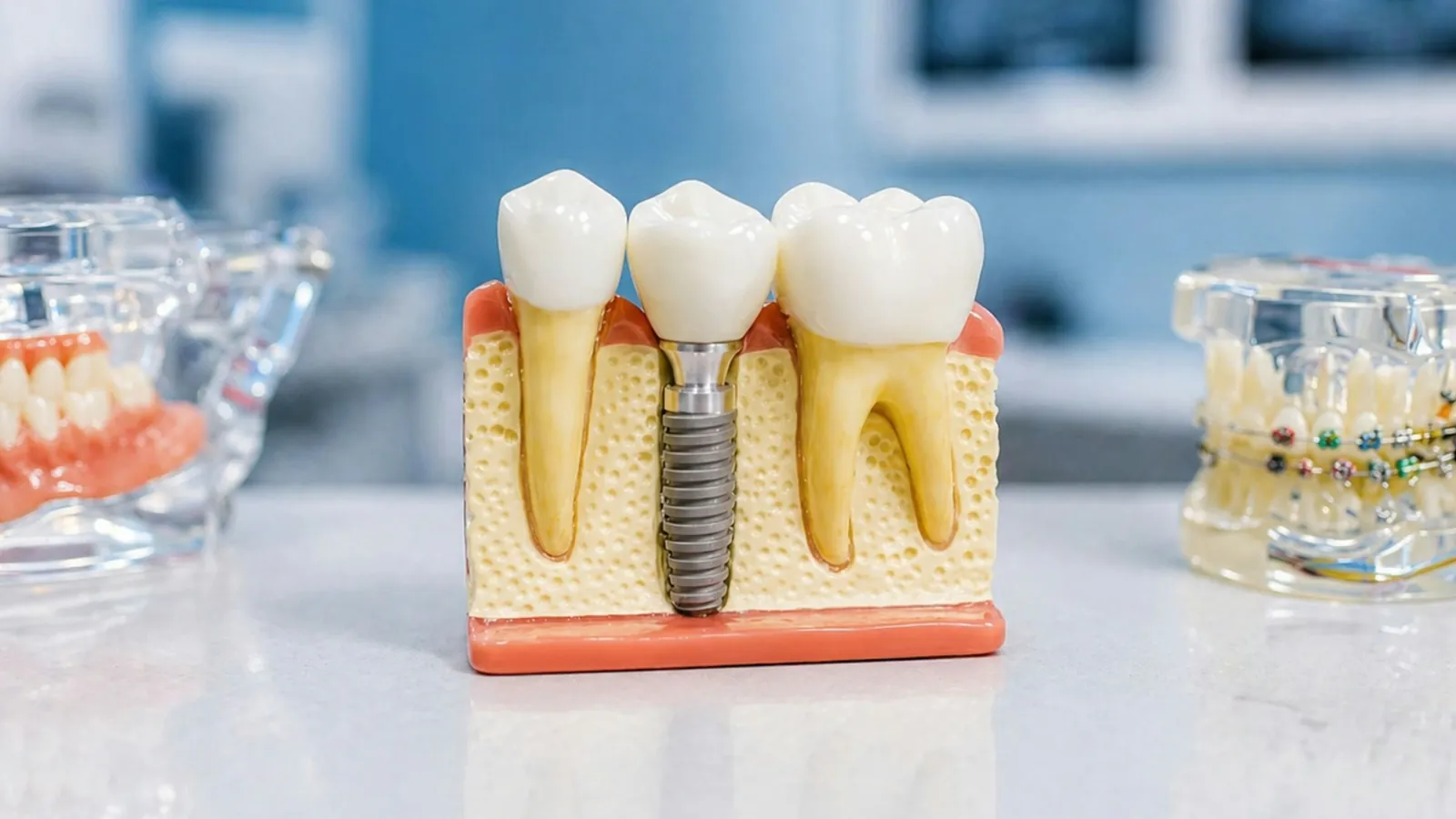
A dental implant is a small post, usually titanium, placed in your jawbone to act as a new tooth root, later topped with a crown that matches your other teeth. It is a strong option if you are missing one tooth or a few. Unlike a bridge, it does not require filing down the healthy teeth beside the gap.
Who it is for
Who is a good fit for a single implant
Many healthy adults with a missing tooth can be considered. What matters is the bone, the gums and your overall health.
- One missing tooth, or a few in a row or spread apart
- A failing tooth that is scheduled to come out
- A loose bridge or a partial you would rather not wear
- Healthy gums, or gum disease that is under control
- Enough bone, or willingness to have a graft first
- Nonsmokers, or smokers willing to pause during healing
How it works
How is a single dental implant placed?
Dr. Abtin uses a cone beam CT scan and 3D virtual surgical planning to choose the implant's position, angle and size before your surgery day. If you are missing most or all of your teeth, full-arch care is handled by ANEWU, with the same surgeon in the same building. If the bone has thinned, a bone graft or a sinus lift may come first.
Consultation and 3D scan
Dr. Abtin listens to what you want, examines the space and takes a cone beam CT scan. The scan shows bone height and width and nearby structures like the sinus and nerve.
Virtual surgical plan
The implant is positioned on screen in 3D first, lined up with where the future crown should sit. If the bone is thin, a graft or sinus lift is planned before or with the implant.
Implant placement
Under local anesthesia or sedation, the post is set into the bone through a small opening in the gum. The gum is closed or fitted with a small healing cap.
Healing and integration
Over the next few months, bone grows tightly around the implant. Ask at your consultation whether a temporary tooth is an option for your gap while it heals.
Abutment and crown
Once the implant is stable, a connector called an abutment and a custom crown are attached. Your plan spells out who makes and fits the crown, your own dentist or the practice, working from the same 3D plan.
Recovery
How long does an implant take to heal?
Discomfort after a single implant is usually mild and short. The healing that matters happens quietly in the bone over the following months.
Expect some swelling and tenderness at the site. Use cold packs, eat soft food on the other side and avoid rinsing hard.
Soreness fades and any stitches dissolve or are removed. Keep the area clean with gentle brushing and the rinse you are given, and do not chew on the implant.
The bone bonds to the implant, a process called osseointegration. Timing depends on your bone, the location and any grafting, and your surgeon checks stability before the crown.
Brush, floss and keep regular dental cleanings. An implant cannot get a cavity, but the gum and bone around it still need care.
Call the office if swelling increases after day 3, if the site bleeds steadily, if the implant or healing cap feels loose, or if anything about your healing concerns you. General after-surgery instructions.
What sedation is used for implant surgery?
Many single implants are placed with local anesthesia alone, since the area is small. If you are anxious, laughing gas (nitrous oxide) can help you relax. When an extraction, graft and implant are done together, some people prefer IV sedation so they can sleep through it. The practice offers sedation options including IV sedation.
About IV sedationDoes insurance cover a dental implant?
Cost depends on the number of implants, whether you need an extraction, graft or sinus lift first, and the crown. Dental insurance may cover part of implant treatment, depending on your plan. The office works with most dental and medical insurance plans and offers financing so you can plan ahead. Ask the team what your plan is likely to cover.
Insurance and financingSister practices
Missing more than a few teeth?
Full-arch treatment lives with our sister practice, ANEWU. Same surgeon, same building, a different program built for replacing a whole arch.
FAQ
Questions about single dental implants
Direct answers first. Your consultation covers the details of your own case.
How long does a dental implant last?
A dental implant is designed as a long-term replacement and can last many years with good care. The crown itself wears like any restoration and may need replacing someday. Daily brushing and flossing, regular cleanings and not smoking all help protect the bone that holds the implant.
Does getting an implant hurt?
Implant placement is done with the area fully numbed, so you should feel pressure rather than pain, and you can sleep through it with IV sedation if you prefer. Afterward, expect soreness similar to having a tooth pulled, which usually eases over a few days.
Can I get an implant if I have lost bone?
Often, yes, but you may need a bone graft or a sinus lift first. The 3D scan shows how much bone you have and exactly where it is thin. In some cases the graft and implant happen at the same visit; in others the graft heals first.
Implant or bridge: which is right for one missing tooth?
An implant is often the more conservative choice when the teeth on either side are healthy, because a bridge requires shaping those teeth for crowns. A bridge can still make sense in some situations, such as limited bone or certain health conditions. Dr. Abtin will go over both options with you and your dentist.
Can an implant go in the same day a tooth is removed?
Sometimes. If the socket is free of infection and there is enough solid bone, the implant can be placed at the same visit as the extraction. When that is not the case, the socket is grafted and the implant follows after healing. Your 3D scan helps decide which path fits.
Further reading
Patient information from health organizations
General education from independent sources. It does not replace advice about your own case.
- Dental implant surgeryAmerican Association of Oral and Maxillofacial Surgeons
- Healing process for dental implantsAmerican Association of Oral and Maxillofacial Surgeons
- Tooth disordersMedlinePlus, U.S. National Library of Medicine
Related procedures
Often planned with single dental implants
Bone Grafting
Socket preservation and ridge augmentation to rebuild thin jawbone so it can support a future dental implant.
Sinus Lift
Adds bone under the sinus in the upper back jaw so an implant has enough support, planned from a 3D scan.
Tooth Extraction
Simple and surgical removal of damaged, infected or broken teeth, with socket grafting when you plan an implant later.
Next step
Questions about dental implants? Ask first.
Book online, or call the office closest to you. If you have pain or an emergency, every attempt will be made to see you that day.
Prefer we call you? Send a request
Monday to Friday, 7:00 AM to 5:00 PM. Closed Saturday and Sunday.