How long does it take to recover from jaw surgery?
Jaw surgery recovery runs in stages: rough first days, a turn around weeks 2 to 3, eating and chewing back for most by weeks 6 to 8, and bone healing for 9 to 12 months. A 2008 prospective study in the Journal of Oral and Maxillofacial Surgery, in which 170 patients rated their recovery daily for 90 days, gives the clearest weekly picture.
Treat the table as a typical pattern, not a schedule. In the 2008 study the average patient was ready for work or school about two weeks after surgery, yet 25 to 33 percent were not, and 40 percent still had substantial limits on recreation at day 30. Those patients were treated at one academic medical center, and their jaws were held together for up to 2 weeks after surgery, so your first weeks may differ.
AAOMS puts full recovery for most people at three to six months and complete jaw healing at nine to twelve. Your surgeon's own instructions on eating, activity and check-ups, including when you move to each diet stage, take priority over any general timeline.
| Time after surgery | Swelling | Eating | Lip and chin feeling | Work or school | Exercise and driving |
|---|---|---|---|---|---|
| Days 1 to 3 | Builds and peaks; head raised | Liquid or very soft | Numb, as expected | Hospital, then rest at home | Rest; no driving |
| Week 1 | Starts to ease; most bruising and bleeding settle by day 7 | Liquids and blended foods | Numb | Off for most | Light movement as allowed; no driving |
| Weeks 2 to 3 | About half gone by week 3 | Soft foods as your surgeon allows | Often still numb | Desk work or school for many around week 2 | Nothing strenuous |
| Weeks 4 to 6 | Little or no problem for most by day 30 | Soft solid foods as allowed | Often improving | Most back to routine | Ask before harder exercise; drive once cleared |
| Weeks 6 to 12 | About a fifth of measured swelling left at 3 months | Opening and chewing back for 75 percent by days 64 to 70 | Improving for many | Back to usual | More exercise as your surgeon clears it |
| Months 3 to 12 | Last traces fade | Normal diet for most | About 1 in 5 still altered at 1 year after lower jaw surgery | Back to usual | Bone fully heals by 9 to 12 months |
Why is day 3 the hardest after surgery?
Day 3 is often the hardest after jaw surgery because facial swelling builds over the first few days and peaks at about 72 hours, the timing University of Illinois Hospital gives its jaw surgery patients, before it starts to go down. In the 2008 study, nausea, bruising and bleeding had settled for most patients by day 7, but swelling took one to two weeks longer.
Cleveland Clinic advises ice packs on the outer jaw over the first 24 hours, 20 minutes on and 10 minutes off, and pillows to prop up your head, which helps with swelling. In the 2008 study, a bad taste and food collecting around the teeth troubled patients in the first week and settled for most during the second, though 20 percent still had a substantial food-collection problem at day 14.
What is not normal is swelling or pain that keeps climbing after the first few days instead of leveling off. Use this list to decide who to call; if you have pain or an emergency, every attempt will be made to see you that day.
- Call 911 for trouble breathing or shortness of breath.
- Go to the emergency room for trouble swallowing, swelling that spreads quickly, or a high fever.
- Call the office for a fever over 100.4 degrees F (38 C), pus or discharge from an incision, bleeding you cannot stop, pain that is getting worse rather than easing, or vomiting that does not stop.
How painful is jaw surgery recovery?
Jaw surgery recovery pain usually fades over two to three weeks for most people. In the 2008 study of 170 patients, 75 percent reported only slight or no average daytime discomfort by day 18, and by day 30 only 4 percent still described their worst pain as substantial. About 20 percent were still taking some pain medicine at day 30.
Pain is not the longest-lasting problem. The same patients took 6 to 8 weeks to get past trouble with opening, biting and chewing, and about 15 percent still had substantial trouble opening, biting or chewing at day 60. Planning for weeks of a soft diet matters more than bracing for weeks of severe pain.
Follow the written instructions from your surgeon for any pain medicine. In the 2008 study, on every day after surgery more patients were taking pain medicine than were reporting substantial pain, so still needing it as pain fades is common. Pain that builds after the first few days, instead of easing, is a warning sign, not a normal stage, so call the office.
Will the numbness in my lips and chin go away?
Lip and chin numbness after lower jaw surgery usually improves, but not for everyone. A 2026 meta-analysis in the Journal of Oral and Maxillofacial Surgery pooled 47 studies of 5,406 patients and found some altered feeling in 21 percent, about 1 in 5, one year after sagittal split surgery of the lower jaw. Older age, larger advancements and nerve handling during surgery raised the risk.
Numbness here means reduced or changed feeling in the lower lip, chin or gums, from stretching or handling of the nerve that runs through the lower jaw. It is expected early and is common in the weeks after surgery. AAOMS notes that a small amount of numbness can persist for several months or longer.
Reported rates vary with how feeling is tested. A 2021 study in Clinical Oral Investigations followed up 48 patients about five years after surgery; of the 45 who had lower jaw surgery, 28 reported lasting lower-lip numbness of varying extent, which the authors call a side effect to discuss before surgery. While your lip is numb, check the temperature of food and drinks first.
Do I need double jaw surgery?
You need double jaw surgery when both the upper and lower jaws are out of position, so moving one would not line up the bite. Double jaw (bimaxillary) surgery moves both jaws in one operation. A 2026 study of 499 cases found it meant longer anesthesia and a longer hospital stay than single jaw surgery, with low and similar complication rates.
A 2020 study of 5,413 mostly teenage patients in the Journal of Craniofacial Surgery also found longer stays after upper or double jaw surgery without more complications or readmissions, while a 2019 national database study found more early wound and overall complications after double jaw surgery. The 2008 recovery study was 40 percent double jaw, so the master table applies to both.
| Single jaw | Double jaw | |
|---|---|---|
| What moves | Upper jaw (Le Fort I) or lower jaw (sagittal split) | Both jaws in one operation |
| Time in surgery | Shorter | Longer anesthesia and operating time |
| Hospital stay | Shorter on average | Longer on average |
| Complications | Low | Similar in two large studies; one 2019 database study found more early wound problems |
| Lip and chin numbness | Linked to lower jaw surgery | Linked to the lower jaw part |
| Swelling | No separate figure; in a 2014 study mixing single and double jaw patients, about half was gone by week 3 | With the chin also moved: most gone in month 1, about 10 percent left at 1 year (2022) |

How long does it take to look normal after jaw surgery?
Most visible swelling after jaw surgery goes in the first month, but the last of it can take a year. A 2014 prospective study in the Journal of Oral and Maxillofacial Surgery measured 49 patients' faces in 3D: about half the swelling was gone by week 3, and only 20 percent remained at 3 months, with real change still happening between 6 and 12 months.
A 2022 study of 46 patients who had both jaws and the chin moved found most swelling resolved during the first month and about 10 percent remained after a year. Judge your new profile at several months, not at week two. Jaw surgery also changes the proportions of your face, and 3D planning previews the likely direction of that change rather than an exact result.
How long to rest after jaw surgery?
Plan on about two weeks at home before desk work or school, and be ready for three. In the 2008 study, routine activities stopped being a problem for the median patient after about 12 to 15 days, and the authors suggest preparing for a three-week absence. AAOMS advises avoiding strenuous exercise in the first few weeks and resuming activities slowly with your surgeon's guidance.
Ask about a physical job, sports and driving separately from desk work, because each depends on your healing and your instructions. In the 2008 study, getting back to recreation took about six weeks. Driving waits until you no longer need medicine that makes you drowsy and can turn your head and react normally; your surgeon tells you when.
How to comfort someone after surgery?
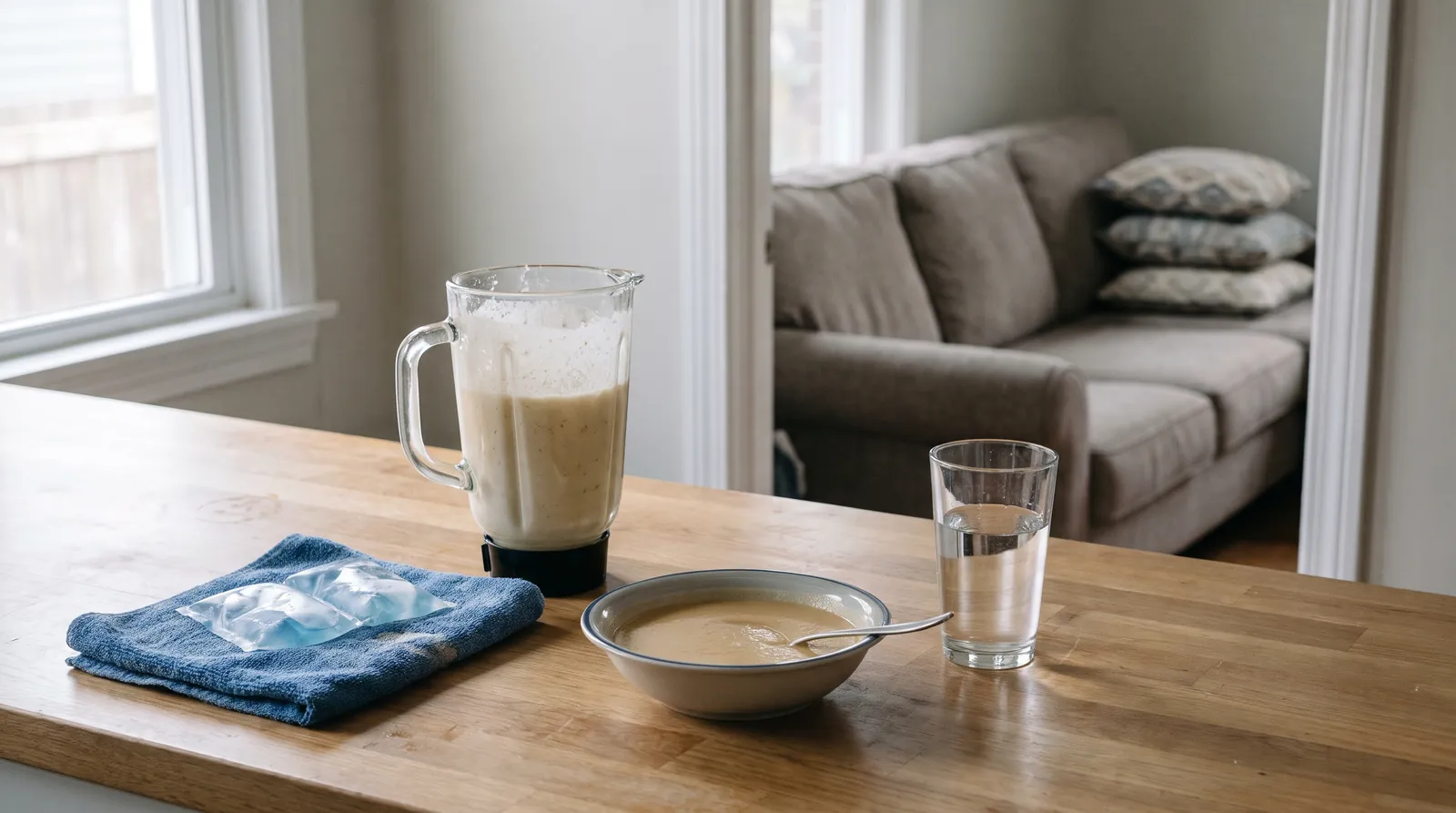
To comfort someone after jaw surgery, set up the home before surgery day, keep them fed and drinking on a liquid or very soft diet, and help them follow the written instructions. Practical help matters most in the first week, when swelling peaks and eating is slow. Having these things ready before the hospital discharge makes the first days easier.
Be patient with energy and mood: in the 2008 study most routines took about two weeks to return, and eating took far longer. Learn the warning signs listed under day 3 so you know when to call, and do not press your person to talk or eat more than they can.
- A blender and nutrient-rich foods that blend well, as Cleveland Clinic suggests.
- Ice packs or cold compresses for the first 24 hours.
- Extra pillows to keep the head raised.
- A written medicine schedule, filled in exactly as prescribed.
- The cleaning and rinse instructions from the written plan, since food collecting around the teeth is common early.
- An adult to drive home from surgery and stay nearby for the first days.
- Both office phone numbers saved in your phone, from the contact page.
What does jaw surgery recovery look like at Greater Atlanta Oral & Facial Surgery?
At Greater Atlanta Oral & Facial Surgery, your recovery is mapped out before the operation. Dr. Abtin Shahriari, the only surgeon at the practice, works out the jaw movements with your orthodontist using 3D virtual surgical planning built from a cone beam CT scan, and tells you in advance where the operation happens and how long you might stay. You leave with written instructions for eating, activity and check-ups.
Appointments are at the Atlanta (Buckhead) and Cumming offices, Monday to Friday, 7:00 AM to 5:00 PM. If you are still deciding, request a consultation and talk the recovery through with the surgeon who would operate; the general after-surgery instructions page covers care common to many procedures.
- The operation usually takes place in a hospital with you fully asleep under general anesthesia; most incisions are inside the mouth, and small plates and screws fix the bones in place.
- Your jaws are usually not wired together, although light elastics may steer your bite for a time.
- Your written instructions come first over any general guide, including this one.
- If healing is on track, you add soft solid foods when your surgeon says so.
- If you develop a fever, bleeding you cannot stop or pain that keeps building, you call the office; for trouble breathing, you call 911.
- Once the bones have healed, your orthodontist makes the final bite adjustments, and the braces come off after that, often several months later.
Questions to ask your surgeon
- Will I have surgery on one jaw or both, and how does that change my recovery?
- Where will my surgery take place, and how long might I stay?
- Will I have elastic bands, and for how long?
- Which diet stage should I be on each week, and who decides when I move on?
- How much lip or chin numbness should I expect for my planned jaw movement?
- When can I return to work, exercise and driving?
This guide is general information about oral surgery, not a diagnosis or a treatment plan. Your own options depend on an exam, your imaging and your health history, and they are set at your consultation. Contact the office with questions about your own care.