What is a stage 3 underbite?
A "stage 3 underbite" is not a clinical term; the phrase most likely refers to a Class III malocclusion, the dental name for a bite in which the lower front teeth close in front of the upper front teeth. A 2018 systematic review of 53 studies found Class III in 5.93 percent of people with adult teeth, the least common bite class.
An underbite is a bite where the lower front teeth close outside the upper ones. Within Class III, severity depends on how far the lower teeth sit forward, whether the jaw bones are mismatched, and whether chewing, speech or the jaw joints are affected. Those details shape the plan, not the label.
The same review found Class III in about 4 percent of children with mixed baby and adult teeth. Cleveland Clinic notes that underbites range from slight ones that need no treatment to more noticeable ones that do.
What causes underbite teeth?
Underbite teeth have two main causes: teeth tipped out of position (a dental underbite) or jaw bones mismatched in size or position (a skeletal underbite). The 2024 Cochrane review describes both: the upper jaw can sit too far back or the lower jaw too far forward, and the front teeth can tip. Many people have some of each.
A dental underbite is one where the jaws relate normally but the teeth are angled wrong. A skeletal underbite is one where the bones are out of step, so even straight teeth meet wrongly. The American Association of Orthodontists sorts underbites the same two ways. Moving teeth can correct a dental underbite, but in a grown adult it can only offset a skeletal one up to a point.
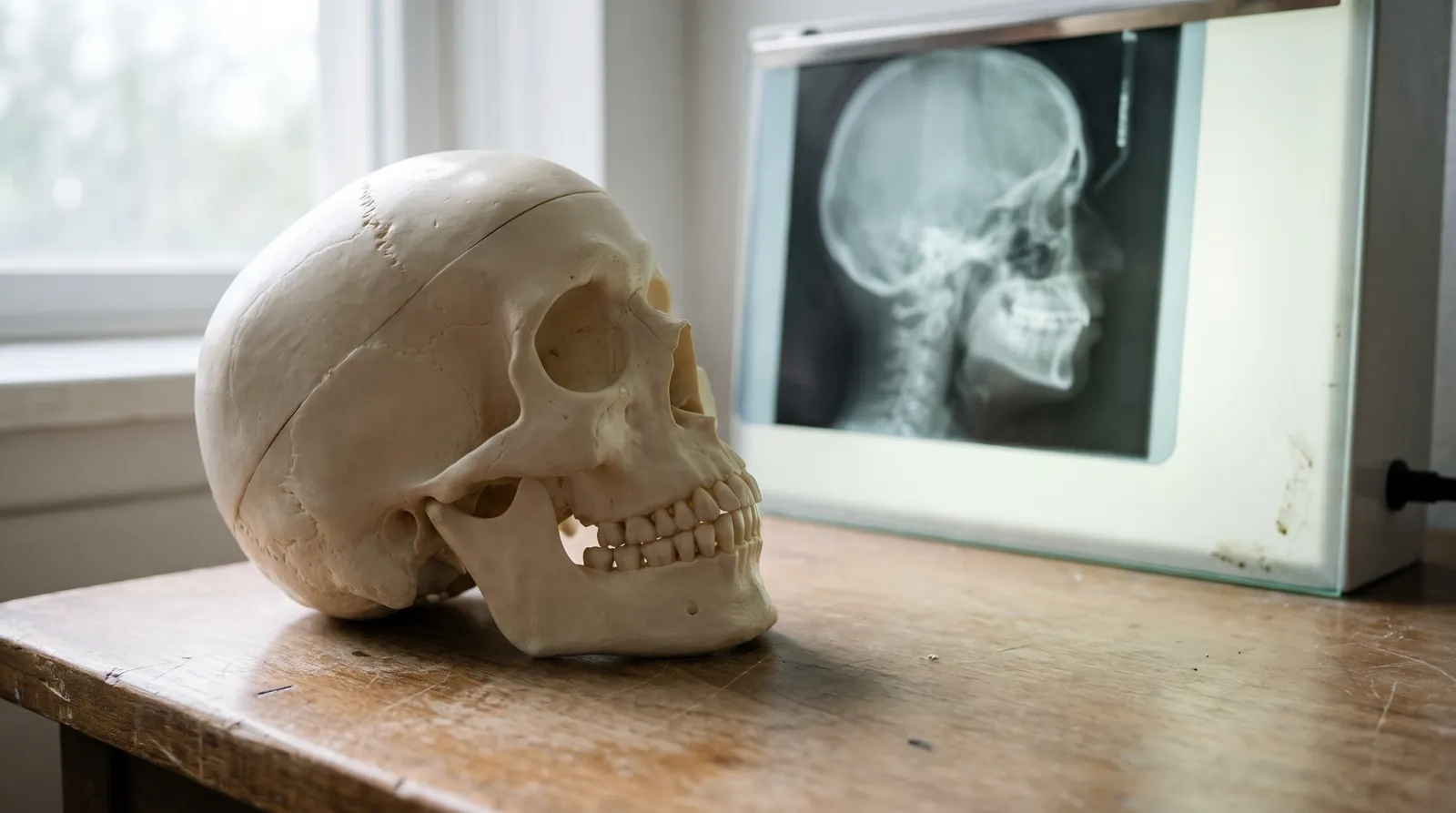
The checklist shows what a clinician looks for; it is not a diagnosis. Records settle it: a side X-ray of the skull or a 3D cone beam CT scan measures how the jaws sit against each other.
| What you notice | Points more to the teeth (dental) | Points more to the jaw bones (skeletal) |
|---|---|---|
| Front teeth | Upper front teeth tipped back or lower ones tipped forward | Teeth fairly upright, or tipped in a way that partly hides a jaw gap |
| Side profile | Chin and midface look in proportion | Lower jaw or chin sits noticeably forward, or the upper jaw looks set back |
| Daily function | Chewing and closing your lips feel normal | Chewing takes effort, or your lips strain to meet |
| Orthodontist's view | Braces or aligners alone are likely to correct it | Braces alone cannot correct the bite |
| X-ray records | Jaw relationship close to the usual range | Measurements show the jaws are mismatched |
Does an underbite need surgery?
An underbite needs surgery mainly when the jaw bones cause it, the mismatch is large and growth has finished. The American Association of Orthodontists says surgery is generally reserved for more severe skeletal cases in adults. Children and people with mild or dental underbites often have non-surgical options, compared in the table below.
Growth modification has the most trial evidence. The 2024 Cochrane review pooled 29 randomized trials of 1,169 children and found moderate-certainty evidence that appliances such as the facemask improved the bite right after treatment, by about 5 mm at the front teeth. In the only long-term trial, the gain shrank by 3 years and was not found at 6. Yet in that trial (Mandall and colleagues, Journal of Orthodontics, 2016), 36 percent of children given a facemask were judged to need jaw surgery, against 66 percent of untreated children.
Adult evidence is thinner. A 2022 systematic review in Clinical Oral Investigations found only 6 eligible studies comparing camouflage with surgery in borderline Class III cases. Camouflage worked mostly by tilting the upper front teeth forward and the lower ones back; surgery moved the jaw bones. A 2026 review in the Journal of Clinical Medicine found 110 of 128 camouflage reports (86 percent) were case reports or small series.
| Option | What it changes | Who it usually fits | Limits and risks |
|---|---|---|---|
| Growth modification (facemask, chin cup, expander) | Guides how the jaws grow | Children still growing; trial patients were 5 to 13 | In the one long trial the gain faded by year 6; some children still needed surgery |
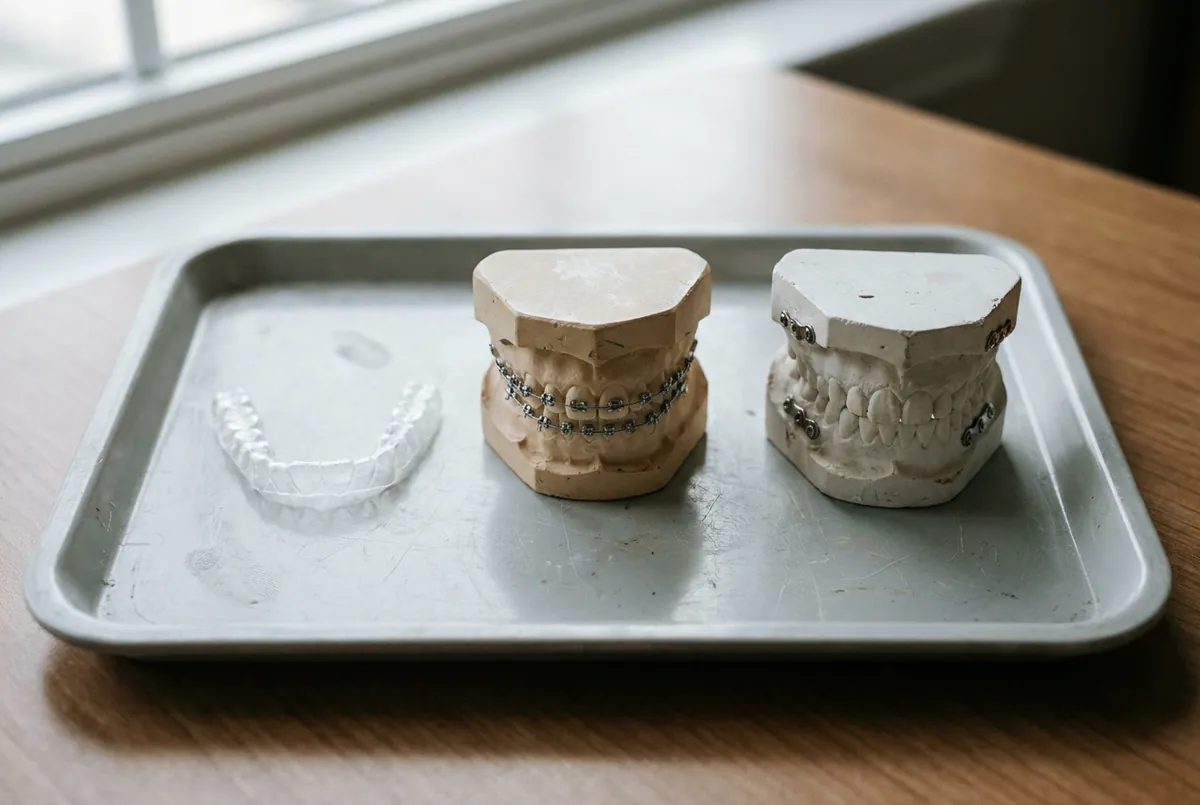
| Braces or aligners (camouflage) | Tilts teeth to cover the jaw gap | Dental underbites, and mild to moderate skeletal ones | Mostly changes tooth angles, not jaw position |
| Crowns or veneers | Reshapes the front teeth | Only mild front-tooth problems; the published reports are single cases, with no trials | Enamel is removed for good (ADA); the jaw does not move |
| Jaw surgery with braces | Repositions one jaw or both | Skeletal underbites once growth has finished | General anesthesia in a hospital, months of braces, weeks of recovery, lip or chin numbness |
Can I fix underbite naturally?
Natural methods are not among the underbite treatments with trial evidence. Every treatment tested in the 2024 Cochrane review was an appliance, such as a facemask or chin cup, used while a child was still growing. Jaw exercises and tongue posture were not among them, and an adult's jaw bones have no growth left to guide.
Growth is the real window. The American Association of Orthodontists recommends a first orthodontic evaluation by age 7 and notes that children tend to have more options because their jaws are still growing. An early check does not mean early treatment; it lets an orthodontist decide whether to treat now or watch growth.
After growth, a 2021 review in the Dental Press Journal of Orthodontics notes that options for a skeletal underbite narrow, and calls surgery the ideal treatment in most adult cases, though many patients turn it down. It names who camouflage can serve instead: adults with a mild to moderate skeletal underbite and acceptable facial balance.
Braces or surgery: which fits an underbite?
Braces fit an underbite when moving teeth can reach a stable, comfortable bite and you are happy with how your face looks; surgery fits when the jaw mismatch is too large for that. The 2022 systematic review in Clinical Oral Investigations found camouflage changes tooth angles while surgery moves the jaws. These lists show who each approach usually does not suit.
The choice often comes down to what bothers you most. If chewing is the problem and your face looks balanced to you, camouflage can be a fair option. If the forward jaw itself is the concern, camouflage may disappoint you, because it changes tooth angles rather than bone position.
- Camouflage usually does not suit a large skeletal mismatch; the 2021 review limits it to mild to moderate cases.
- Camouflage usually does not suit you if your main goal is a different profile, because tilting teeth leaves the jaw bones in place.
- Veneers or crowns usually do not suit healthy teeth: the ADA notes the enamel removed for a veneer makes it irreversible, and veneers may be a poor choice if you clench or grind.
- Surgery usually does not suit a child or teen who is still growing, since it is usually done once growth has finished.
- Surgery usually does not suit a mild dental underbite that braces can correct, or a bite that causes you no problems.
- Surgery may need to wait if a year or more of braces before the operation does not fit your life right now, or if your general or gum health needs care first.
What happens if an underbite is left untreated?
An untreated mild underbite that causes no symptoms may simply stay as it is. A larger one can lead to problems AAOMS lists among the reasons for corrective jaw surgery: difficulty chewing or biting, chronic jaw joint (TMJ) pain, excessive tooth wear, lips that cannot meet without straining and chronic mouth breathing. Cleveland Clinic adds that a childhood underbite left alone may become more pronounced in adulthood.
Leaving a mild underbite alone is reasonable when it does not affect how you eat, speak or feel about your face. Get it checked if chewing takes effort, your teeth wear unevenly or your jaw joint aches; jaw joint pain is covered on the TMJ treatment page.
Most underbites change slowly. A bite that changes suddenly is different and needs a prompt exam. If any of these happen, call the office right away; if you have pain or an emergency, every attempt will be made to see you that day.
- Your bite feels different all at once after a fall, a sports hit or a blow to the face.
- Your jaw locks open or closed, or you cannot bring your teeth together.
- Jaw pain in front of the ear keeps climbing instead of settling.
- Call 911 or go to the emergency room for trouble breathing or swallowing, swelling that spreads, or a high fever.
Is it worth fixing an underbite?
Fixing an underbite is often worth it when it limits chewing, comfort or confidence, and the research on surgery supports that for many patients. A 2022 meta-analysis in the International Journal of Environmental Research and Public Health found large gains in oral health quality of life 4 to 7 months after jaw surgery in Class III patients. The costs are time, recovery and real risks.
That review included 13 studies but could pool only 4, so treat the size of the gain as an estimate. A second 2022 review, in Clinical Oral Investigations, found quality of life tends to dip during the braces stage before surgery and rise after treatment, on low-quality evidence.
The trade-offs of surgery are concrete: months of braces on both sides of the operation, general anesthesia in a hospital, a liquid then soft diet, and lip or chin numbness, which is common early and usually lessens with time. Camouflage avoids the operation but leaves the jaw bones where they are.
What does underbite care look like at Greater Atlanta Oral & Facial Surgery?
At Greater Atlanta Oral & Facial Surgery, an underbite visit starts with Dr. Abtin Shahriari, the only surgeon at the practice, who spends most of the consultation listening to how your bite and profile affect you. Photos, bite records and, if your case calls for one, a 3D cone beam CT scan come next. Then you learn whether surgery suits you and which other routes are open.
Visits take place at the Atlanta (Buckhead) and Cumming offices, and the plan is made with you, not for you. The practice works with most dental and medical insurance plans for surgical care. If you want a surgical opinion on your underbite, request a consultation, and read the jaw surgery page for how surgery is planned.
- You can book the visit yourself, online or by phone; if your dentist refers you, the office contacts you to schedule.
- You describe what bothers you, and Dr. Abtin examines your jaws and bite.
- Records are taken: photos, bite records and a 3D cone beam CT scan if needed.
- If surgery is not right for your case, you are told so and walked through the other options.
- If surgery fits and growth is finished, the jaw movements are planned with your orthodontist on a 3D model, and braces usually come first.
- If you are still growing, surgery is usually not the next step.
Questions to ask your surgeon
- Is my underbite mainly dental, skeletal or a mix, and what in my records shows that?
- Has my jaw growth finished, and how can you tell?
- What would braces or aligners change, and what would they leave the same?
- If I chose surgery, which jaw would move: upper, lower or both?
- How many months of braces would I need, first and then after surgery?
- What happens if I decide to wait or not to treat it?
This guide is general information about oral surgery, not a diagnosis or a treatment plan. Your own options depend on an exam, your imaging and your health history, and they are set at your consultation. Contact the office with questions about your own care.