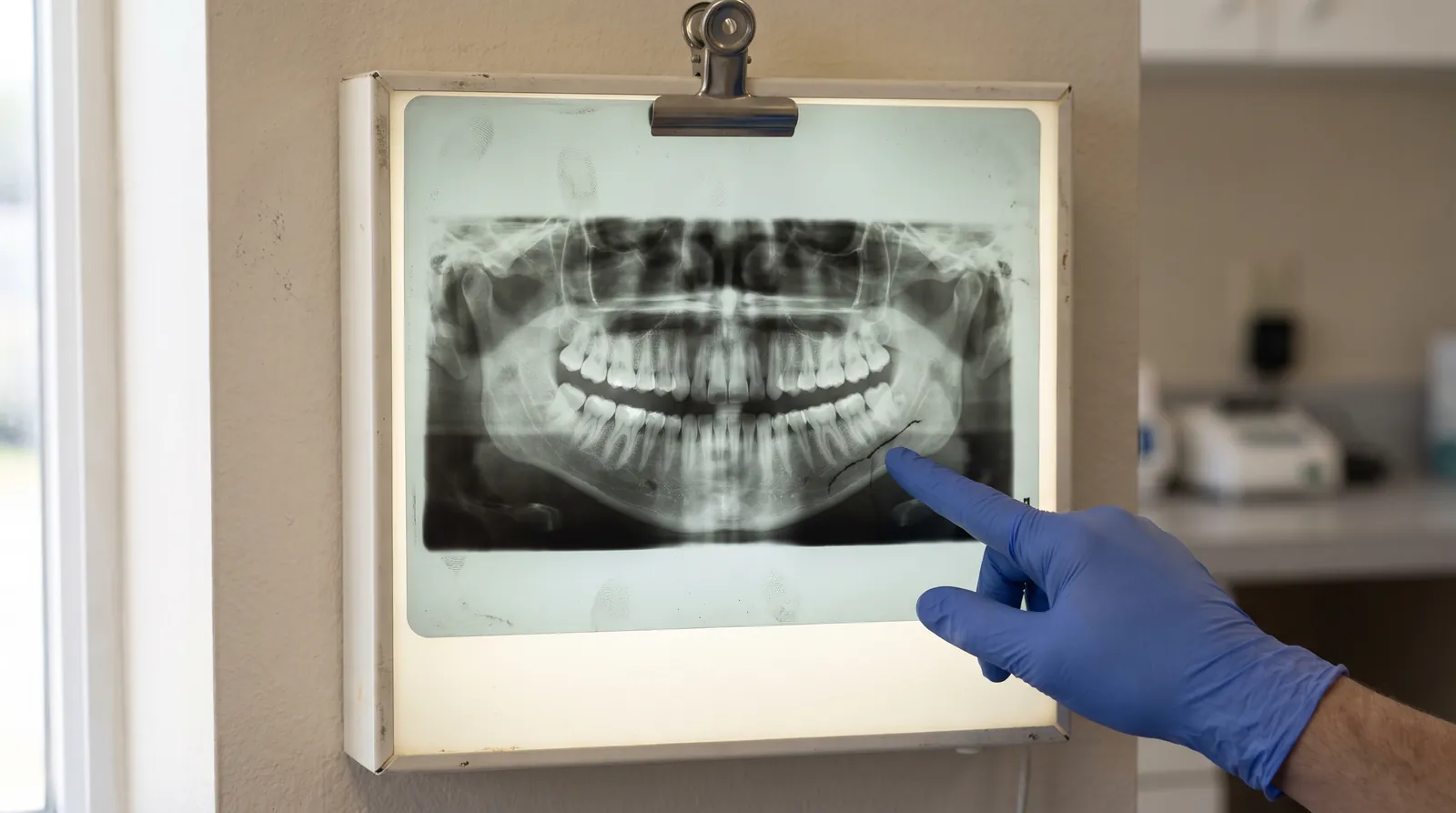
How do I know if I have broken my jaw?
You may have broken your jaw if your teeth suddenly do not fit together, the pain gets worse when you chew or open, the jaw shifts to one side as you open, or your lower lip feels numb. MedlinePlus also lists loose teeth, bleeding from the mouth, a lump along the jaw and ear pain. Only an exam and imaging can confirm a fracture.
A broken jaw (mandible fracture) is a crack or break in the lower jawbone, the horseshoe-shaped bone that holds your lower teeth. Cleveland Clinic calls it the second most common facial fracture and names interpersonal violence as the most common cause, followed by vehicle accidents. It also lists workplace accidents and sports injuries.
Being able to move your jaw does not rule out a break. The MedlinePlus symptom list describes pain that worsens with movement and difficulty opening widely, not a jaw that cannot move at all. That is why a blow to the face followed by a bite that feels different deserves an exam, even when the pain seems manageable.
How do you know if your jaw is broken or just bruised?
A bruised jaw is sore, swollen and discolored, but the bite usually feels normal and the mouth opens fully. A broken jaw changes how the teeth meet. A dislocated jaw is different again: the mouth may be stuck open or the jaw may jut forward. The signs overlap, so the table pairs each pattern with what to do next.
A bruise is an area of skin discoloration from small leaking blood vessels, and MedlinePlus notes it can last days to months. A dislocated jaw means the lower jaw has slipped out of one or both jaw joints in front of the ears, so the mouth may not close. Do not push either one back into place yourself.
| What you notice | Points toward | What to do now |
|---|---|---|
| Trouble breathing, heavy bleeding, a head injury or passing out | A possibly life-threatening injury | 911 or the nearest ER first |
| Mouth stuck open, jaw jutting forward, drooling, trouble talking | Dislocated jaw | Get seen today at an ER or by a surgeon; do not push it back yourself |
| Teeth suddenly do not meet, pain when biting or opening, numb lower lip, loose teeth, bleeding from the mouth | Broken jaw | Once 911 signs are ruled out, call an oral surgeon's office today |
| Sore, swollen and discolored, bite feels normal, mouth opens fully | Bruised jaw, though a small break can feel the same | Cold compress; call for an exam if the bite changes or you are unsure |
| Swelling growing after day 3, fever, a wound reopening, a bite getting worse | Infection | Call the office today; ER if swelling spreads toward the eye or neck |
How serious is a broken jaw?
A broken jaw is an urgent injury that needs prompt care, because it can cause breathing problems or bleeding. MedlinePlus lists a blocked airway, bleeding, inhaling blood or food into the lungs and infection among the possible complications. Most broken jaws heal well with treatment, but the first hour matters. These are the steps to take before you reach care.
The same blow can also injure the head, which is why the emergency room comes first whenever a 911 sign is present. Once you are stable, an oral and maxillofacial surgeon handles the jaw and teeth. Left untreated, Cleveland Clinic notes, a broken jaw may not heal or may heal in a way that affects how your face looks or works.
- Check breathing and bleeding. Trouble breathing, heavy bleeding, a head injury or passing out means 911 or the nearest ER.
- Leave the jaw where it is. MedlinePlus says a provider, not you, should correct its position.
- Support the jaw gently with your hand on the way to care. A bandage wrapped under the chin and up over the head also helps, as long as it can come off fast if you vomit.
- Hold a cold pack wrapped in a towel on the swelling for up to 15 minutes each hour.
- Note when you last ate or drank, because IV sedation needs an empty stomach.
- If an adult tooth was knocked out, pick it up by the crown and keep it in milk.
- Once you are safe, call the oral surgeon's office and describe what happened.
Can a broken jaw heal without surgery?
Yes, some broken jaws heal without surgery. MedlinePlus says a minor fracture can heal on its own, and a 2024 systematic review in the British Journal of Oral and Maxillofacial Surgery found that 69 of 80 patients (86%) with breaks away from the jaw joint did well without surgery. Those patients were carefully selected, and a surgeon still has to confirm the break qualifies.
The 2024 review pooled only 4 studies, and its authors note that non-surgical care for these fractures is rare and that more research is needed on which fracture patterns suit it. In practice the questions are whether the bone has shifted and whether your bite still fits, which only an exam and a scan can answer.
Will a broken jaw heal on its own without any care? It may knit in the wrong position, leaving a bite that does not fit or jaw joint pain. A 2013 Cochrane review of 12 trials, all comparing surgical methods, found too little high-quality evidence to back any single approach for breaks away from the joint, so the plan depends on your scan and your bite.
Does a broken jaw have to be wired shut?
A broken jaw often does not have to be wired shut. Open reduction and internal fixation (ORIF) is surgery that lines up the broken bone and holds it with small plates and screws, which often lets you open your mouth soon afterward. When wiring is used, MedlinePlus says the wires usually stay in place for 6 to 8 weeks.
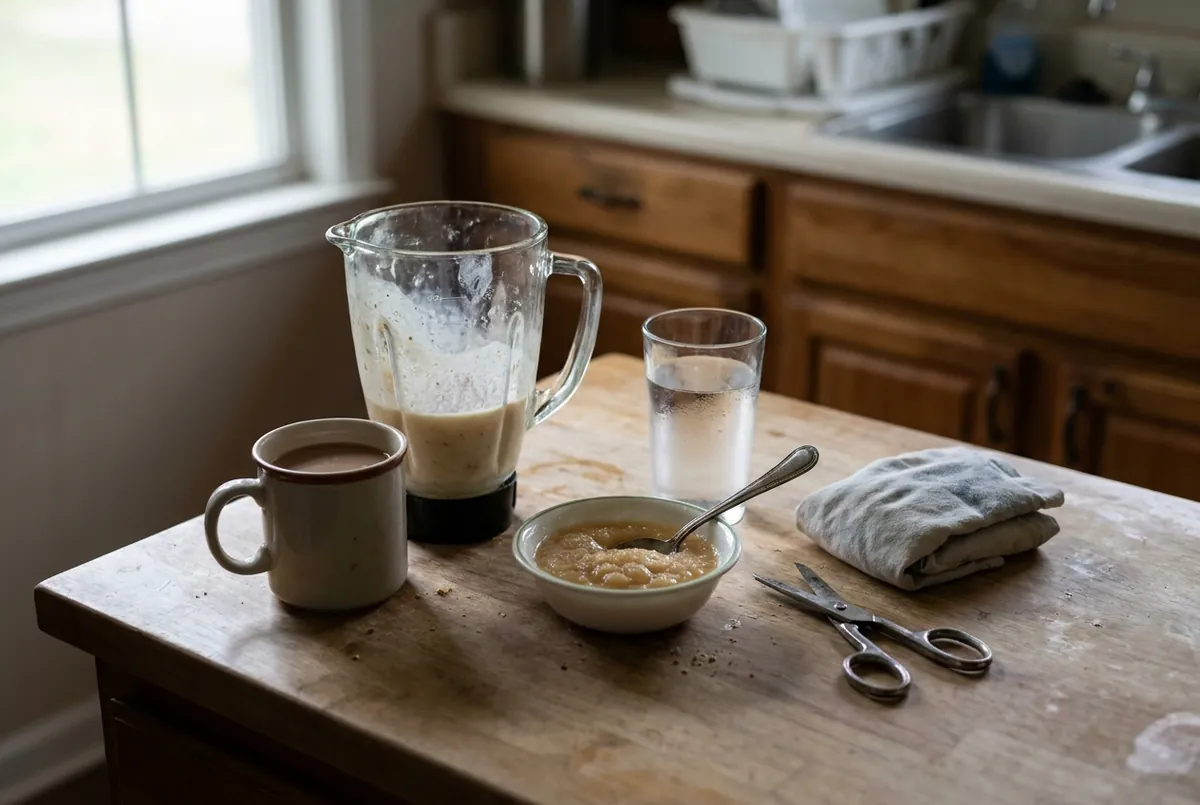
Maxillomandibular fixation (MMF) means holding the upper and lower teeth together with wires or small rubber bands while the jaw heals. MedlinePlus notes that some elastics come off after a few weeks to reduce joint stiffness. If you are banded or wired, keep blunt scissors with you in case of vomiting or choking, and call your surgeon right away if you cut them.
Plates have trade-offs too. A 2023 meta-analysis of 75 studies and 5,825 patients in Scientific Reports found infection after plate repair of the jaw in 4.2% of patients overall and 7.3% in the studies done in America. For breaks at the jaw joint, a 2023 meta-analysis in Plastic and Reconstructive Surgery found plates reduced joint pain and bite problems. Infections were more frequent with plates, though that difference was not statistically clear, and the authors flag the known risk to the facial nerve. The hardware resembles that used in planned jaw surgery.
How long will it take to recover from a broken jaw?
Recovery from a broken jaw usually takes several weeks, and full recovery can take a few months. Cleveland Clinic says a mild fracture may mean four to six weeks on liquids, and that after surgery the bone can need a month or longer to heal completely. The table lists healing time by type of treatment.
The Greater Atlanta OFS facial trauma page describes the usual pattern: swelling peaks in the first 48 hours, weeks 1 to 2 mean soft or liquid food and no contact sports, and from weeks 2 to 6 the bone keeps knitting as diet and activity widen. Injured teeth are watched for months afterward.
| Treatment | Usually used for | How the jaw is held | Typical healing time |
|---|---|---|---|
| No surgery, soft or liquid diet, close follow-up | A minor break, bite still fits | Not held; you rest the jaw | Liquid diet for about 4 to 6 weeks for a mild fracture (Cleveland Clinic) |
| Wiring or elastics (MMF, closed reduction) | Some breaks, using the teeth as anchors (AAOMS) | Upper and lower teeth wired or banded together | Wires usually 6 to 8 weeks (MedlinePlus) |
| Plates and screws (ORIF) | More severe or multiple breaks | Small plates on the bone; jaws usually not wired shut | Bone knits over weeks 2 to 6; a month or more to heal fully (Cleveland Clinic) |
| Jaw joint (condyle) fracture | A break near the joint in front of the ear | Elastics with guided movement, or plates | Varies; plates meant less later joint pain, weighed against infection and facial nerve risk (2023 review) |
| Dislocated jaw, not a break | The jaw slipped out of its joint | Put back by a provider, then bandaged | No wide opening for at least 6 weeks (MedlinePlus) |
What does broken jaw care look like at Greater Atlanta Oral & Facial Surgery?
At Greater Atlanta Oral & Facial Surgery, a jaw injury is examined by Dr. Abtin Shahriari, whose surgical work includes high-risk trauma cases at Level 1 trauma centers. He co-authored the 2008 Journal of Oral & Maxillofacial Surgery paper Facial Trauma Coverage Among Level-1 Trauma Centers of the United States. Your care then follows the steps below, with a branch for each finding.
The exam starts with how your teeth meet, the bones of your face and whether any area feels numb. Injury care for the jaw and face usually goes through medical insurance, and some damage to teeth is handled by dental coverage instead. The practice works with most dental and medical insurance plans for surgical care, and the after-surgery instructions page covers general home care while you heal.
- Any 911 sign means the emergency room first; a referral to an oral and maxillofacial surgeon can follow once you are stable.
- If you are stable, call the Atlanta (Buckhead) or Cumming office: if you have pain or an emergency, every attempt will be made to see you that day.
- If your case needs it, a cone beam CT, which is a 3D X-ray, is taken to locate fracture lines and injured teeth.
- If the scan shows the bone has shifted, the pieces are lined up again; small plates and screws often hold them, which spares many people from having the jaws wired together.
- If the fracture is complex, expect the repair to happen under general anesthesia in a hospital; your surgeon tells you where.
- If teeth were knocked loose or out, the aim is to reposition and splint them where possible, and your dentist is kept informed.
- After the repair, you come back so your bite, teeth and any wounds can be checked as you heal.
Questions to ask your surgeon
- Where exactly is the break, and has the bone shifted?
- Can this heal without surgery, and what would make you change that plan?
- Will my jaws be wired or banded, and for how long?
- Is the numbness in my lip or chin likely to improve?
- What can I eat each week, and when can I return to sports?
- Will any injured teeth need more treatment later?
What are the symptoms of a jaw infection?
Signs of infection after a jaw injury or repair include swelling that keeps growing after the third day, a fever, a wound that reopens, a bite that feels worse and pain that climbs instead of easing. MedlinePlus lists infection of the jaw or face among broken jaw complications, and a 2023 meta-analysis put infection after plate-and-screw repair at about 4.2%.
While you heal, call early rather than waiting. The offices are open Monday to Friday, 7:00 AM to 5:00 PM. If you think your jaw is broken and no 911 sign is present, you can contact the office about a jaw injury today.
- Trouble breathing or swallowing, heavy bleeding, or swelling spreading toward the eye or down the neck: call 911 or get to an ER.
- Call the office today for a fever, swelling that grows after day 3, a wound that reopens or a bite that feels worse.
- Call right away if you had to cut your wires or elastics, so they can be replaced.
- Call your surgeon about new numbness, a loose plate or screw you can feel, or pain that keeps climbing.
This guide is general information about oral surgery, not a diagnosis or a treatment plan. Your own options depend on an exam, your imaging and your health history, and they are set at your consultation. Contact the office with questions about your own care.